How to Publish an Audiobook in India
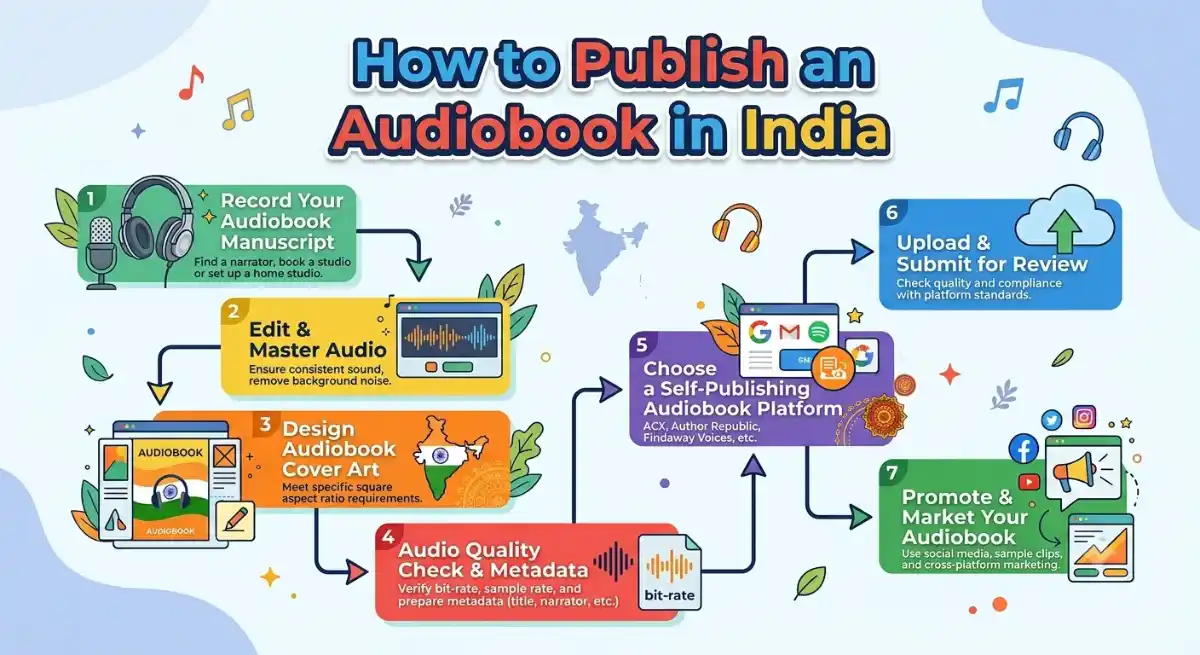
Audiobooks are transforming how readers consume content across India. Converting your manuscript into a professionally narrated audiobook allows you to tap into a growing audience of listeners on the go. This complete guide walks you through every stage of audiobook publishing—from adapting your text and selecting the right voice talent to studio recording, audio mastering, platform selection, pricing, and promotion—ensuring your story reaches listeners nationwide while protecting your rights.
How to Publish an Audiobook in India: A Complete Guide for Authors
Audiobooks are changing the way people read. Many readers now prefer listening to books while travelling, exercising, working, cooking, or relaxing. Instead of setting aside time to sit down with a physical book, listeners can enjoy stories and learn something new while continuing with their daily routines.
For authors, this creates an opportunity to reach a wider audience and give their books a new format. If you have already published a paperback or e-book, converting it into an audiobook can help you connect with readers who prefer audio content. Even if your book has not been published yet, you can plan an audiobook edition as part of your publishing strategy.
But how does audiobook publishing work in India? Do you need a professional narrator? How much does it cost? Where can you publish the audiobook? And how do authors earn royalties?
This guide explains the complete audiobook publishing process in India, from preparing your manuscript and recording the narration to editing, distribution, pricing, and promotion.
What Is an Audiobook?
An audiobook is an audio version of a book that is narrated and recorded for listeners. Instead of reading the text on a printed page or screen, people listen to the book through a smartphone, tablet, computer, smart speaker, or audio application.
Audiobooks can include:
- Novels and short stories
- Poetry collections
- Self-help books
- Business and finance books
- Biographies and memoirs
- Educational content
- Children’s books
- Spiritual and motivational books
- History and non-fiction books
Most audiobooks are narrated by professional voice artists, but some authors choose to narrate their own work. The right approach depends on the book’s genre, target audience, language, and overall style.
Why Should Authors Publish an Audiobook?
Publishing an audiobook is not only about following a trend. It can help authors make their content more accessible and create another way for readers to discover their work.
Reach Readers Who Prefer Audio
Some people enjoy listening more than reading. Audiobooks are useful for people who have busy schedules, travel frequently, or prefer learning through audio.
By offering both written and audio editions, authors can serve different reading preferences without changing the core content of the book.
Give Your Book a Longer Life
A book does not have to exist in only one format. A paperback can later become an e-book, audiobook, hardcover edition, or translated edition.
Publishing an audiobook may create renewed interest in a book that has already been available for some time.
Improve Accessibility
Audiobooks can make content easier to access for people who find traditional reading difficult. They can also be helpful for listeners who prefer spoken content because of visual limitations, reading challenges, or personal learning preferences.
Build a Stronger Author Brand
An audiobook can help authors create a stronger presence across multiple formats. If the author narrates the book, listeners may also develop a more personal connection with the author’s voice and storytelling style.
Create an Additional Revenue Opportunity
An audiobook may generate income through sales, subscriptions, licensing arrangements, or royalty-based distribution. The earnings depend on the platform, agreement, pricing model, and number of listens or purchases.
Step 1: Prepare Your Manuscript for Audio
Before recording begins, the manuscript should be reviewed specifically for listening.
A sentence that reads well on paper may sound too long or complicated when spoken aloud. Audiobook listeners cannot easily look back at a previous paragraph, so the narration should be clear and easy to follow.
Review the manuscript and check for:
- Long or difficult sentences
- Repeated information
- Complex tables
- Charts and graphs
- Footnotes
- Website links
- References that only make sense visually
- Unclear abbreviations
- Unusual names or technical terms
You may need to adapt certain sections for audio. For example, instead of saying, “Refer to the table on page 45,” the narration could explain the important information directly.
For non-fiction books, it is useful to prepare a pronunciation guide for names, locations, technical terms, and foreign words. This helps the narrator maintain consistency throughout the recording.
Step 2: Decide Who Will Narrate the Audiobook
The narrator has a major impact on the listener’s experience. A good voice can make the content engaging, emotional, clear, and easy to follow.
Authors generally have three options.
The Author Narrates the Book
Some authors prefer to record their own audiobook. This can work especially well for memoirs, autobiographies, personal-development books, motivational content, and books based on the author’s experiences.
Author narration can make the audiobook feel personal and authentic. However, reading a complete book professionally requires more than having a good speaking voice. The narrator needs consistent pronunciation, pacing, energy, and recording quality.
Hire a Professional Voice Artist
A professional narrator may be a good choice for fiction, novels, children’s books, dramatic stories, or books that require different voices and emotional expression.
Professional voice artists understand pacing, tone, character delivery, microphone technique, and listener engagement.
Before selecting a narrator, listen to sample recordings and check whether the voice matches the mood of your book.
Use AI Voice Technology
AI-generated narration is becoming more widely available. It may reduce production time and cost, especially for simple informational content.
However, the quality can vary. Some AI voices may sound natural, while others may feel repetitive or lack emotional expression.
Before choosing AI narration, check the distribution platform’s policies and review the complete audio carefully. The voice should suit the book and provide a comfortable listening experience.
Step 3: Choose the Right Language and Voice Style
India has a diverse audience, and audiobook listeners may prefer content in English, Hindi, or regional languages.
Before production, decide:
- Which language will be used?
- Does the book need to be translated before narration?
- Should the narrator use a neutral accent?
- Is the book formal, conversational, emotional, or educational?
- Does the book require multiple narrators?
- Are different character voices necessary?
The narration style should match the genre.
A suspense novel may require a dramatic and expressive voice, while a business book may need a confident and professional tone. A children’s story may benefit from energetic narration and character variation.
Step 4: Record the Audiobook
Audiobook recording should be done in a quiet and controlled environment.
Professional studios use equipment designed to reduce background noise and produce clear voice recordings. A home setup can also work if the room is properly treated and the recording equipment is suitable.
A basic recording setup may include:
- A quality microphone
- Headphones
- Audio recording software
- A quiet room
- A microphone stand
- A pop filter
- Sound-absorbing materials
During recording, the narrator should maintain a consistent distance from the microphone. The voice should be clear and steady, without sudden changes in volume.
It is better to record in shorter sessions rather than trying to complete the entire book in one sitting. Long recording sessions can cause vocal fatigue and affect consistency.
Step 5: Edit and Master the Audio
Recording is only one part of audiobook production. The raw audio usually needs editing before it is ready for publication.
The editing process may include:
- Removing mistakes and repeated lines
- Reducing background noise
- Removing unnecessary pauses
- Correcting uneven volume
- Improving clarity
- Adjusting pacing
- Checking pronunciation
- Dividing the recording into chapters
Audio mastering helps create a consistent listening experience across the entire book.
The final audio should be reviewed using headphones as well as regular speakers. This can help identify issues that may not be noticeable during editing.
Step 6: Review the Audiobook Before Approval
Before publishing, listen to the complete audiobook or review every chapter carefully.
Check:
- Is the narration clear?
- Are all chapters included?
- Is the chapter order correct?
- Are names pronounced correctly?
- Is the pacing comfortable?
- Is the volume consistent?
- Are there unwanted noises?
- Are there missing sentences?
- Does the narrator maintain the same tone throughout?
It is useful to ask another person to listen to selected chapters. A fresh listener may notice issues that the author or narrator has missed.
Do not approve the final audio only after listening to a short sample. Review the complete production before publishing.
Step 7: Prepare Audiobook Metadata
Metadata is the information used to identify and describe the audiobook on publishing and distribution platforms.
Audiobook metadata may include:
- Book title
- Subtitle
- Author name
- Narrator name
- Publisher name
- Book description
- Genre and category
- Language
- Duration
- Release date
- Cover image
- Keywords
The title and description should be accurate and easy to understand.
The book description is especially important because it helps listeners decide whether they want to hear the audiobook. Explain the main topic, story, or benefit without revealing important plot details.
Use relevant keywords naturally. Avoid repeating the same phrase multiple times because keyword stuffing can make the description difficult to read.
Step 8: Create an Audiobook Cover
Audiobook cover art should be clear and recognizable, even when displayed as a small thumbnail on a mobile screen.
The cover should include:
- Book title
- Author name
- Clear visual design
- Readable typography
- Relevant artwork or imagery
The narrator’s name may also be included if required by the platform or publishing arrangement.
Avoid using too much text. A design that looks attractive on a large screen may become difficult to read when reduced to a small app icon.
The cover should also follow the technical requirements of the platform where the audiobook will be published.
Step 9: Choose an Audiobook Publishing Platform
Authors can publish audiobooks through direct platforms, audiobook distributors, or publishing service providers.
The right choice depends on the author’s goals, language, budget, target audience, and preferred distribution model.
Before choosing a platform, check:
- Which countries does it support?
- Which languages are accepted?
- Where will the audiobook be distributed?
- Is the agreement exclusive or non-exclusive?
- How are royalties calculated?
- How often are royalty reports provided?
- Are there any setup or distribution charges?
- Can the audiobook be removed or updated later?
- Who controls the publishing account?
Some platforms focus on international distribution, while others may have stronger access to Indian listeners. A publishing service may also manage production, metadata, distribution, and reporting on behalf of the author.
Always review the agreement before publishing.
Step 10: Set the Audiobook Price
Audiobook pricing may be handled differently from paperback or e-book pricing.
The final price can depend on:
- Total duration
- Genre
- Production cost
- Distribution platform
- Subscription model
- Target market
- Comparable audiobooks
Some platforms allow authors or publishers to influence pricing, while others use fixed pricing structures or subscription-based access.
Before deciding on a price, compare similar audiobooks in the same category. Consider the value of the content and the audience’s expectations.
Step 11: Publish and Distribute the Audiobook
After the audio files, cover, and metadata are approved, the audiobook can be submitted for review and distribution.
The platform may check:
- Audio quality
- File format
- Chapter structure
- Cover specifications
- Metadata accuracy
- Content compliance
The review process may take time. If an issue is found, the author or publisher may need to update the files before the audiobook is approved.
Once the audiobook is live, check the listing carefully. Confirm that the title, author name, narrator name, cover, description, and audio sample are displayed correctly.
Step 12: Promote Your Audiobook
Publishing the audiobook is only the beginning. Readers need to know that it is available.
A simple audiobook marketing plan may include:
- Sharing a short audio sample
- Announcing the release on social media
- Posting behind-the-scenes recording content
- Sharing the narrator’s introduction
- Creating short promotional videos
- Sending updates to existing readers
- Requesting honest reviews
- Working with book reviewers
- Running targeted advertisements
- Including the audiobook link on the author’s website
Audio samples can be especially useful because they allow listeners to experience the narrator’s voice before choosing the book.
For fiction, share an interesting scene without revealing a major plot point. For non-fiction, share a section that provides useful information or solves a common problem.
How Much Does It Cost to Publish an Audiobook in India?
The cost of audiobook publishing in India depends on the length of the book and the services included.
The total cost may involve:
- Script preparation
- Translation or adaptation
- Professional narration
- Studio recording
- Audio editing
- Sound mastering
- Cover design
- Distribution
- Marketing
Narration is often one of the largest production costs. A longer book usually requires more recording and editing time.
Some providers charge based on the finished duration of the audiobook, while others offer project-based packages.
Before selecting a service, request a detailed quotation and confirm:
- Total estimated duration
- Narration charges
- Number of revisions
- Editing and mastering costs
- Distribution coverage
- Royalty structure
- Ownership of the audio files
- Delivery timeline
- Additional charges
The lowest quotation may not always provide the best result. Audio quality has a direct impact on listener satisfaction, so professional production can be a valuable investment.
How Long Does Audiobook Production Take?
The timeline depends on the length and complexity of the book.
A short audiobook may be completed faster, while a long novel with multiple characters may require more recording and editing time.
The process generally includes:
- Manuscript preparation
- Narrator selection
- Sample recording
- Full narration
- Audio editing
- Mastering
- Author review
- Corrections
- Metadata and cover preparation
- Platform submission
- Review and distribution
The author’s response time also affects the schedule. Quick and clear feedback can help keep the project moving.
Do Authors Keep Copyright to Their Audiobooks?
Copyright ownership depends on the publishing agreement.
In many cases, the author retains the copyright to the original book. However, the agreement may contain separate terms related to the audiobook recording, narration, distribution rights, and ownership of the final audio files.
Before signing, check:
- Who owns the audiobook recording?
- Does the author retain audio rights?
- Is the agreement exclusive?
- How long does the agreement remain active?
- Can the audiobook be distributed elsewhere?
- Can the author change the narrator?
- Can the author request the final audio files?
- What happens if the agreement ends?
If any clause is unclear, ask for written clarification before moving forward.
Common Mistakes to Avoid When Publishing an Audiobook
Choosing a Narrator Without Listening to Samples
A narrator’s voice should match the genre and audience. Always review sample recordings before making a final decision.
Recording Without Preparing the Manuscript
A print manuscript may contain references that do not work in audio. Review and adapt the text before recording.
Ignoring Audio Quality
Background noise, uneven volume, poor pronunciation, and uncomfortable pacing can reduce the listener’s experience.
Rushing the Final Review
Listen to every chapter before approving the audiobook. Fixing errors after publication may take additional time and cost.
Using a Voice That Does Not Match the Book
The narration should support the mood and purpose of the content.
Ignoring Distribution Terms
Understand where the audiobook will be available, how royalties are calculated, and whether the agreement is exclusive.
Publishing Without a Marketing Plan
Even a professionally produced audiobook may remain undiscovered without promotion.
Frequently Asked Questions About Audiobook Publishing in India
Can I publish an audiobook in India?
Yes. Authors can publish audiobooks in India through audiobook platforms, distributors, or professional publishing services.
Can I narrate my own audiobook?
Yes. Authors can narrate their own books if they have a suitable recording setup and can maintain clear, engaging, and consistent delivery.
Can I publish an audiobook in Hindi?
Yes. Audiobooks can be produced in Hindi, English, and many Indian regional languages, depending on the narrator and distribution platform.
Do I need a professional studio?
A professional studio is not always required, but the recording environment must be quiet and capable of producing clean audio. Professional studios can provide more consistent quality.
How long should an audiobook be?
There is no fixed length. The duration depends on the original manuscript, narration speed, genre, and content.
Can I publish an audiobook if my printed book is already published?
Yes. An existing paperback or e-book can be converted into an audiobook, provided the author owns or has the required audio rights.
How do audiobook authors earn royalties?
Royalty calculations depend on the platform or publishing agreement. Earnings may be based on sales, subscriptions, listening activity, licensing, or other distribution models.
Can I use AI narration for my audiobook?
AI narration may be available for some projects, but authors should review the quality and confirm that the chosen platform accepts AI-generated audio.
Final Thoughts
Publishing an audiobook can help authors reach listeners who may never pick up a printed book but are happy to listen while travelling, working, exercising, or relaxing.
The process involves more than reading a manuscript into a microphone. A successful audiobook requires careful script preparation, suitable narration, clean recording, professional editing, accurate metadata, effective distribution, and consistent promotion.
Take time to choose the right narrator and publishing partner. Review the complete audio before approval, understand the distribution agreement, and make sure the audiobook reflects the quality of your written work.
An audiobook is not simply another version of a book. It is a new listening experience. When produced thoughtfully, it can help an author reach a wider audience, strengthen their brand, and give their story or knowledge a new way to connect with people.
Crown Publishing
Dedicated to bringing author dreams to reality with standard self-publishing solutions across India.